
Google Local Services Ads Cost: What a Lead Costs in 2026
Google publishes no price for Local Services Ads leads. Here is what drives the price, what gets credited, and what the 2026 move into Google Ads changes.

The short answer
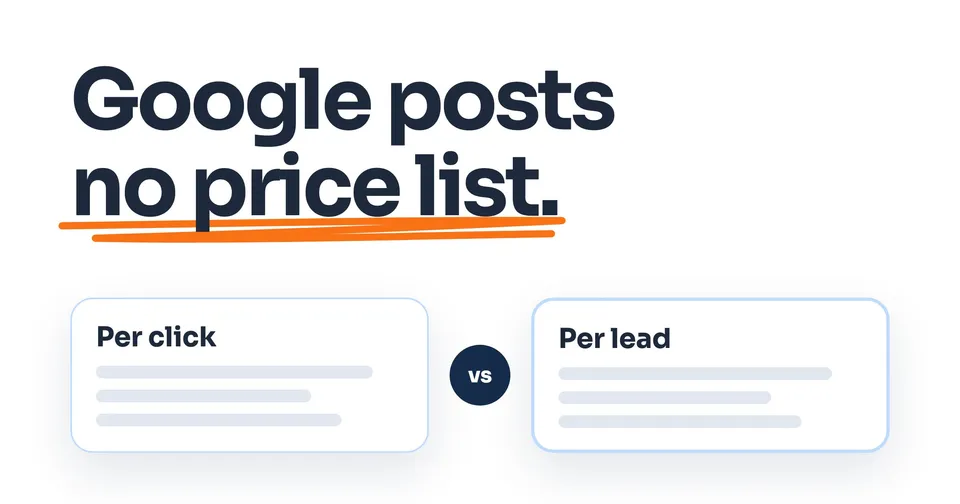
Google publishes no price list. You pay for each valid lead, such as a call you answer, a message or a booking request, and the price moves with your location, the job type, the type of lead and your bid. One software company's February 2026 data from 888 contractors came to $53 a lead. Judge it by cost per booked job.
The rest of this guide shows you how.
On this page
- What a Local Services Ads lead costs
- What you're charged for, and what gets credited back
- The napkin math: cost per booked job
- Local Services Ads or regular Google Ads?
- Local Services Ads are moving into Google Ads: what changes
- Google Verified replaced Google Guaranteed
- When Local Services Ads aren't worth it yet
A lead price on its own won't tell you whether these ads pay. So the math below turns one into a cost per booked job, then covers what Google charges for and credits back, and what changes as Google moves these ads into Google Ads. Every number comes from Google's help pages or a named, dated source, checked on 25 September 2026. None of it is a result from one of our clients.
What a Local Services Ads lead costs
Google's own pricing answer has no dollar figure in it: "You choose the budget that works for your business based on the number of new leads you want every week," and "You only pay when potential customers get in touch through your ads on Local Services Ads." What moves the price, in Google's words: "Lead prices may vary depending on your location, the job type, the type of lead, or your bidding mode."
It is an auction. "When similar local businesses bid on the same lead, those bids determine how much the lead is worth." Your profile counts too. Google weighs your rating, your number of reviews, your average response time, your photos and the checks you've completed, and says higher-quality profiles "may rank higher and may also pay lower costs per lead."
One public dataset says how it was measured: SearchLight's. SearchLight sells marketing attribution software to home service businesses, and it measured $6.72 million in Local Services Ads spend across 888 contractors and 126,650 leads in February 2026. Here is the cost per lead, what each valid lead cost, by trade:
| Trade | Cost per lead | Accounts |
|---|---|---|
| Electrical | $39 | 112 |
| HVAC | $51 | 409 |
| Plumbing | $57 | 230 |
| Drain and sewer | $59 | 23 |
| All 888 contractors | $53 | 888 |
Each figure is total spend divided by total leads, for one month, for one company's customers, and SearchLight itself notes that February is heating season for HVAC. There is no roofing, cleaning, pest or landscaping figure in it. Treat it as a starting point for your own math, not a quote.
Why a text can cost less than a call
A phone call and a message aren't priced the same. Google says "Message leads are typically priced lower than the corresponding phone lead price, although that's not always the case." It prices a message on how likely that customer is to book you, including whether they have already contacted other Local Services advertisers.
What you're charged for, and what gets credited back
You pay for a valid lead, not a click. Google counts five kinds: a text or email from the customer, a voicemail, a call you answer, a missed call you return, and a booking request. "Leads determined to be invalid or low quality are not charged." Google keeps checking after that: "Charged leads get reassessed by our models over time, and may be issued credits automatically if determined to be low quality." In most cases the credit lands within 30 days, and the original charge still shows on your invoice.
Two things catch people out. First, Google's "How to dispute charges" link now leads to its page on automatic credits, not a dispute form. Each lead also has a feedback survey, and Google's page on how leads work says: "We may also occasionally credit leads you report as poor quality through this survey." Second, some leads that feel wrong still count. Google won't credit a lead that came in outside your business hours, a customer asking for advice or researching prices, a canceled booking, or a customer who never answered your callback. So set your business hours to the hours someone answers.
And "Google no longer supports credits for 'job type not serviced' and 'geo not serviced' leads." Set your job types and service area to match the work you actually do, or you will pay for leads you cannot take.
The napkin math: cost per booked job
Close rate is the share of your leads you book. Cost per booked job is your cost per lead divided by your close rate, and it's the number to hold against your average job.
Here it is with numbers you can check. SearchLight's HVAC contractors paid $51 a lead. For its Maximize leads setting, where Google manages the bid for you, Google suggests "a minimum budget of 10 leads per week," so that's $510 a week. Once your account moves into Google Ads, Google divides that by 7 for a daily budget, $72.86, and caps the month at 30.4 days' worth: $2,214.86. That buys about 43 leads. Book 1 in 3 and you have about 14 or 15 jobs, at $153 each.
| If you book | At $51 a lead (HVAC, February 2026) |
|---|---|
| 1 in 2 leads | $102 per booked job |
| 1 in 3 leads | $153 per booked job |
| 1 in 4 leads | $204 per booked job |
| 1 in 5 leads | $255 per booked job |
Those close rates are examples. For reference, SearchLight's contractors booked 43.9% of their leads that month, across all trades. Your own rate moves this more than the lead price does, and with Maximize leads Google sets the bid, so your real price will move too. Covering the cost is revenue, not profit: hold $153 against what a job leaves you after materials and labor.
Local Services Ads or regular Google Ads?
Google's own answer is short: "Standard Google Ads are customizable, pay-per-click text ads open to any business. In contrast, Local Services Ads are pay-per-lead listings for verified local service providers, which appear at the top of the page and feature a Google Verified badge." You also don't pick keywords. Google says targeting "is based on the service categories and areas you offer."
Be careful comparing published numbers. A Local Services lead is a contact Google has judged valid. In search benchmarks like LocaliQ's, cost per lead is "how much you're spending for a conversion", a different yardstick. In SearchLight's own data, Local Services leads cost $53 in February against $104 for Google Ads leads in January (816 contractors), but the jobs were smaller: $1,826 on average against $2,465. Cheaper leads, smaller tickets. For the pay-per-click side, here's what Google Ads costs per click and per lead by trade.
Google recommends running the two side by side, and it sells both. The comparison that settles it is cost per booked job, in your own account.
Local Services Ads are moving into Google Ads: what changes
Google is moving Local Services Ads inside Google Ads, as Performance Max campaigns with pay-per-lead goals. Performance Max is a Google Ads campaign type; this version shows only on Search and Maps. The deal stays the same: "You still only pay for valid leads (such as phone calls and messages) rather than ad clicks," There are still no keywords, and a Google Verified badge moves over automatically.
The controls change. Your weekly budget becomes a daily one, as in the example above. "Manual bidding (such as setting a maximum cost-per-lead) is no longer supported in Google Ads." Your business name, address and hours sync one way from your Google Business Profile, the listing that shows on Maps, and a big change to your name or address triggers a review that typically takes 24 to 48 hours. And "Your Local Services Ads performance reports will not transition to Google Ads", so save them before your date.
When is your date? Google's schedule: August 2026 for "select home and storefront service advertisers" in the US, including plumbing, HVAC, electrical, roofing and pest control; late 2026 for "service-area businesses without physical storefronts"; 2027 for the rest, including garage door and locksmith accounts. Google emails the account administrator 14 days before your date and again 7 days later, and says to allow up to two weeks for performance to settle afterward.
Starting fresh? "You can't create new campaigns with pay-per-lead goals directly within Google Ads at this time," so a new advertiser still signs up through Local Services Ads.
Google Verified replaced Google Guaranteed
If you're looking for the Google Guaranteed badge, it's gone. In August 2025 Google announced that "Starting in October", one badge, Google Verified, would replace Google Guaranteed, Google Screened, License Verified by Google and the Money Back Guarantee. Businesses already verified got the new badge automatically, the money-back guarantee ended, and Google says "Local Services Ads ranking won't be affected by this change."
Getting the badge still means passing Google's checks. Depending on your trade and state, screening "may include background, business registration, insurance, and license checks, and minimum review requirements." Background checks cover every owner and, in some trades, anyone who does the work for the customer, and "Businesses aren't charged for the background check."
When Local Services Ads aren't worth it yet
More leads only help if someone answers them. That is true of every ad, but here a missed call costs you twice: the job, and your ranking. Google counts how quickly you respond, and says "Missed calls may negatively affect your responsiveness." Before you add more of them, run the missed-call calculator.
Wait if any of these is true: your schedule is full, daytime calls go to voicemail, your trade isn't on Google's list, or you can't tell which leads turned into jobs. Google's Leads page lets you mark each lead "Booked" or "Completed", and it only helps if someone does it; tracking where each call came from covers the rest. And you need a verified Google Business Profile first: Google says "You must have at least one verified Google Business Profile."
If the listing is the gap, start there. It's what these ads are built from, and it's what Foundation looks after. When the phone is answered and you have room, Acquisition adds the ads.
The calculator below works out an Acquisition month, our fee plus ad spend, and how many booked jobs at your average job it takes to cover it.
Try it with your numbers
Work out your monthDrag to your budget and your average job
- Ad spend, paid to the platform
- $2,000
- Our fee
- $1,249
- Your total month
- $3,249
- Booked jobs to cover it
- 4
Our fee stays at $1,249 until your ad spend passes $5,000 a month.
Jobs to cover it means revenue from booked jobs at your average job, before your own costs. Your margin decides the real profit.
People also ask
How much does Google Local Services Ads cost?
Google gives no set price. You choose a budget by how many leads you want each week and pay only for valid leads, and Google says the price varies with your location, the job type, the type of lead and your bidding mode. For a benchmark, SearchLight's February 2026 data from 888 home service contractors came to $53 a lead, from $39 for electrical to $59 for drain and sewer.
What's the difference between Local Services Ads and Google Ads?
Regular Google Ads charge per click, you choose the keywords, and any business can run them. Local Services Ads charge per valid lead, have no keywords, are listings for businesses Google has verified, and show the Google Verified badge. From August 2026 Google is moving Local Services Ads into Google Ads as Performance Max campaigns with pay-per-lead goals, and you still pay per lead.
What happened to the Google Guaranteed badge?
Google replaced it. In August 2025 Google announced that, starting in October, one badge, Google Verified, would replace Google Guaranteed, Google Screened, License Verified by Google and the Money Back Guarantee. Businesses already verified got the new badge automatically, and the money-back guarantee ended with the old badges.
Why is my Local Services Ads cost per lead going up?
Leads are priced in an auction: when similar businesses nearby bid on the same lead, those bids set what it is worth. Google also says profile quality, including your rating, number of reviews, response time and photos, affects where you show and may lower your cost per lead, and that missed calls can hurt your responsiveness. More competitors, a different bid mode or a different mix of jobs will all move the price.
Do Local Services Ads still charge per lead after the move to Google Ads?
Yes. Google says you still pay only for valid leads, such as calls and messages, not clicks, and your ads still show only on Search and Maps. What goes away is manual bidding: you can no longer set the most you'd pay per lead. Each lead's charge status, including automatic credits, shows on the Leads page in Google Ads.
Sources
- Google, Reach Local Customers with Local Service Ads (FAQ and eligible categories), read 25 September 2026.
- Google Local Services Help, How leads work, read 25 September 2026.
- Google Local Services Help, About Automated Local Services Ads lead credits, read 25 September 2026.
- Google Local Services Help, How bidding works, read 25 September 2026.
- Google Local Services Help, About ad rankings, read 25 September 2026.
- Google Ads Help, Local Services Ads transition to Performance Max campaigns with pay-per-lead goals, read 25 September 2026.
- Google Ads Help, About pay-per-lead goals for Performance Max campaigns, read 25 September 2026.
- Google Ads Help, About goals and leads for pay-per-lead goals, read 25 September 2026.
- Google, The Keyword blog, Google Verified (20 August 2025), read 25 September 2026.
- Google Local Services Help, About Google Verified badge, read 25 September 2026.
- Google Local Services Help, Understand the screening and verification process, read 25 September 2026.
- SearchLight, Google Local Service Ads Cost Per Lead by Trade (2026), read 25 September 2026.
- LocaliQ, Search Advertising Benchmarks for Home Services (last updated 15 July 2026), read 25 September 2026.
Keep Reading
 Stage 2: Acquisition Google Ads for Contractors: What It Costs and What to Track The pay-per-click side: what a click and a lead cost in your trade. 12 min read · Read the Guide →
 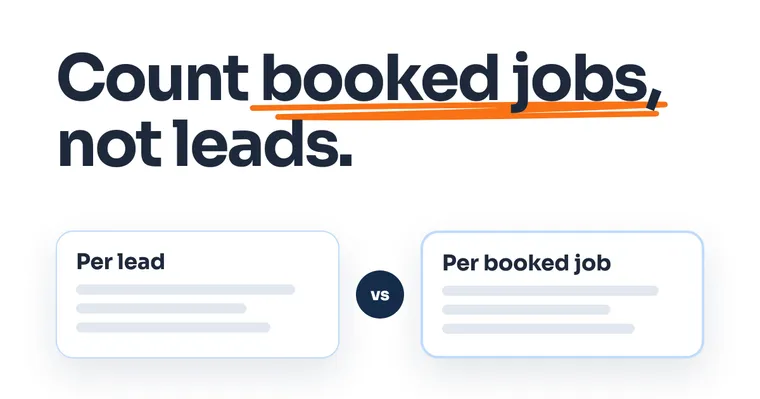 Stage 2: Acquisition Is Thumbtack or Angi Worth It? Do the Math per Booked Job The same booked-job math on the lead platforms. 7 min read · Read the Guide →
  Stage 1: Foundation How to Track Phone Calls From Your Website Your close rate starts with knowing where each call came from. 9 min read · Read the Guide →